

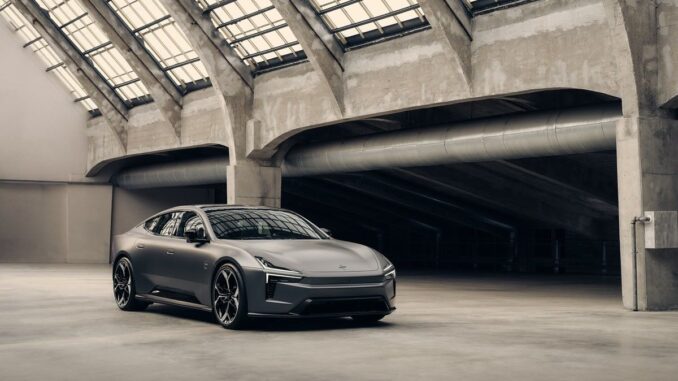
Polestar is continuing to lead the automotive industry in climate transparency by publishing comprehensive Life Cycle Assessments (LCAs) for every vehicle in its line-up. Since 2020, the company has made these reports publicly available, allowing customers to understand the full environmental impact of its vehicles. The latest model to receive a full assessment is the four-door GT Polestar 5.
Greater transparency in EV manufacturing
Polestar is the first automotive manufacturer to disclose the complete carbon footprint of every model it produces. The cradle-to-gate carbon footprint of the Polestar 5 is 23.8 tCO₂e, covering emissions from raw material extraction through the manufacturing process and delivery to the customer. By revealing this data, the company aims to drive greater accountability within the automotive industry and support efforts to reduce emissions throughout the production process.
Sustainable materials reduce emissions
Reducing emissions begins with the materials used in vehicle manufacturing. Aluminium, one of the most carbon-intensive materials in car production, has been sourced differently for the Polestar 5. Around 13% of the aluminium used is recycled, while 83% comes from smelters powered by renewable electricity. This approach avoids more than 14 tCO₂e per vehicle compared with conventional aluminium sourcing.
Renewable energy also powers key production facilities involved in manufacturing the Polestar 5, including sites producing battery cell modules and other essential battery materials, further lowering emissions associated with vehicle production.
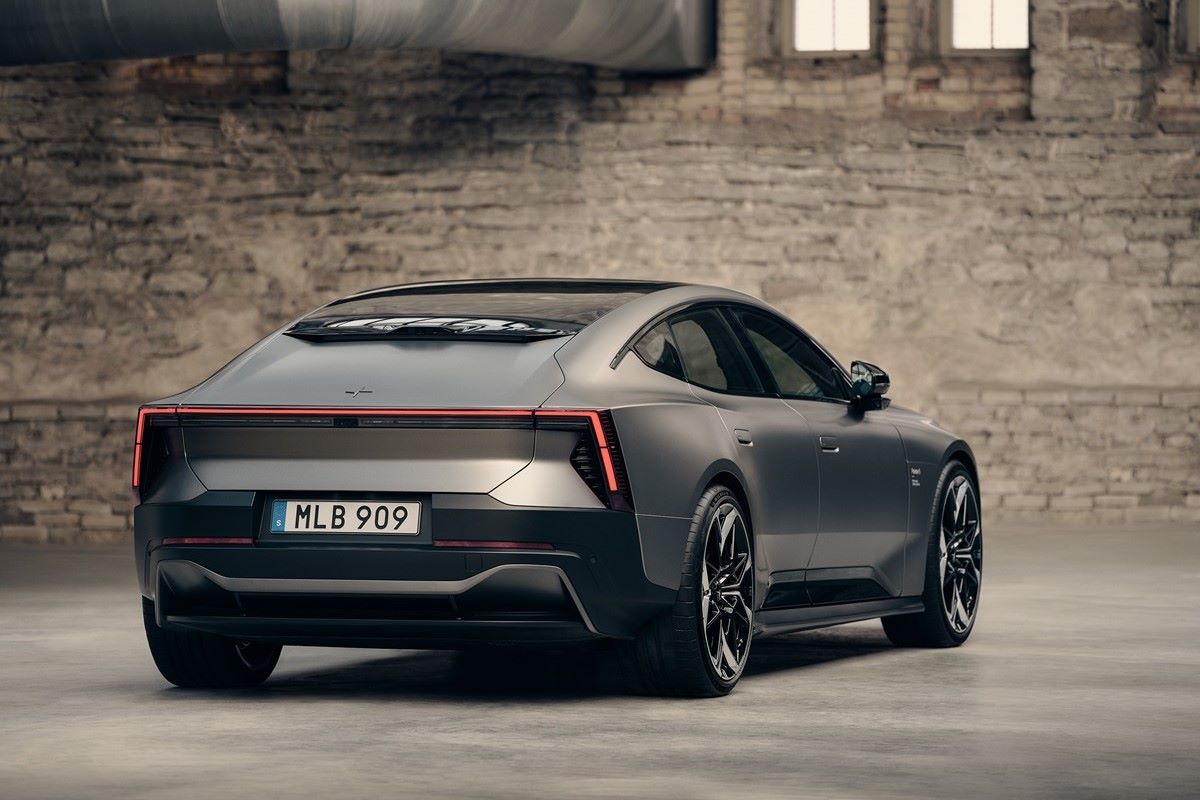
Innovative, lower-impact interior materials
Inside the Polestar 5, innovative materials help minimise environmental impact. Natural fibre composites developed with Bcomp use flax-based ampliTex™, a bio-based alternative to carbon fibre that uses 50% less fossil-based material and can be up to 40% lighter than conventional plastic composites.
The interior also incorporates recycled materials such as Econyl carpets, produced from discarded fishing nets and recycled PET textiles. Circular design principles extend to the front luggage compartment which uses a mono-material recycled PET construction that simplifies recycling at the end of the vehicle’s life.
Customers who prefer leather can opt for Nappa leather from Bridge of Weir, a chrome-free material and a natural by-product of the food industry produced under strict animal welfare standards.
Performance without compromise
Despite its strong focus on sustainability, the Polestar 5 remains a high-performance electric Grand Tourer. The vehicle delivers up to 650 kW (884 hp) and 1,015 Nm of torque, with a WLTP driving range of up to 678 km. Thanks to its 800-volt electrical architecture and 350 kW DC fast-charging capability, the battery can charge from 10% to 80% in as little as 22 minutes.
By combining transparency, sustainable materials, renewable energy and cutting-edge performance, Polestar continues to demonstrate how electric vehicles can reduce environmental impact without sacrificing power or driving experience, with Fredrika Klarén, Head of Sustainability at Polestar, commenting:
“You cannot reduce what you don’t measure. Making the carbon footprint of a car visible helps focus the industry on where emissions occur, particularly in materials and manufacturing. That transparency is essential if we want to scale the low-carbon materials, renewable energy and circular solutions needed to reduce the climate impact of cars.”
For more information on the new Polestar 5 which is available to order now, please visit: www.polestar.com.
Author Bio:
Colin Lewis is a collector of classic cars, owns an EV and writes about lesser known scenic routes throughout Europe.
Photograph courtesy of Polestar

Be the first to comment