

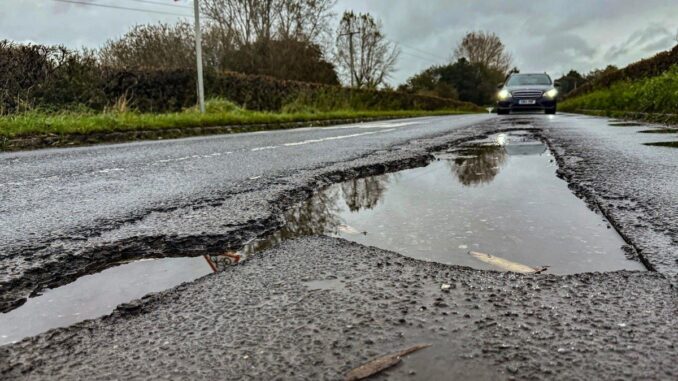
Potholes have been in the news a lot this year and back in February the RAC recorded an incredible 225 pothole-related breakdown reports every day! This is five times the daily average recorded for the whole of last year, which totalled an average of 43 per day.
To put this into perspective, in February alone, some 6,290 drivers contacted the RAC after hitting a pothole compared to 1,842 in February 2025. Clearly the roads in Britain are getting worse every year and this is largely down to the repair backlog.
The pothole problem is a hot potato when it comes to local elections and what councils are spending our money on. And good luck with trying to get any form of compensation from your local authority should you hit a pothole and break your suspension or ruin a wheel and tyre. They are very reluctant to pay out.
Apparently, there is now a record £18.62bn pothole repair backlog and it’s become such an issue that the government is now threatening to withhold funding from councils that fail to repair their potholes. The pressure on councils is compounded by a 91% rise in pothole compensation.
Claims submitted to 177 local councils rose 91% in three years, from 27,731 in 2021 to 53,015 in 2024, with only 26% of claims being settled.
The average payout of £390 falls well short of the £590 average repair bill, leaving successful claimants £200 out of pocket. This means that the majority of drivers whose claims are rejected have to foot the bill themselves, which many would argue is unfair and unreasonable given the already high cost of running and taxing a car these days.
The RAC Pothole Index shows that drivers are now 1.55 times more likely to break down due to a pothole than they were 20 years ago when records first began. Last year the RAC attended 26,048 pothole-related breakdowns which is an increase of 15% on the year before and 20% more punctures in early 2026 than in the same period last year.
What is the right response?
Richard Moss, Road Repair Expert at highway maintenance specialist Instarmac, asks whether it as simple as agreeing an increase in funding? Well, this government seems to think it is and have announced an additional spend of £1.6bn for pothole repair in 2025-26, with a longer-term commitment of £7.3bn over four years. Whilst that sounds a substantial amount of money, how local authorities spend it will be key in addressing this growing problem on Britain’s roads.
Interestingly, the Asphalt Industry Alliance (AIA) puts the current repair backlog at a record £18.62bn and estimate that it would take 12 years to clear the backlog at current funding levels.
Three solutions to permanent repair
Getting the response right means addressing the problem at three levels. The first is preventative maintenance. This means surface dressing and drainage improvements that stop potholes from forming in the first place. Simply filling potholes without sealing the roads is fighting a losing battle.
Secondly, resurfacing roads that have gone beyond the point of reasonable repair. It’s false economy to repeatedly patch structurally compromised road surfaces with the cumulative cost quickly exceeding what a full resurfacing would have cost.
Now that councils have access to multi-year funding settlements, they are a position to plan and prioritise resurfacing programmes rather than lurching from one emergency pothole to the next.
The third solution is implementing permanent, fast repair methods for the potholes that do appear. Permanent cold-lay repair products have changed what’s operationally possible on a constrained budget. What this means is that a two-person crew can carry out a durable, permanent repair without hot works, road closures or specialist equipment making it faster and cheaper per repair.
This means that councils that specify repair quality rather than just repair volume, will see the difference in their claims data long before they see it in their budgets.
Author Bio:
Simon Burrell is a UK-based motoring and travel journalist and editor, a member of the Guild of Motoring Writers and former saloon car racing driver.
Image courtesy of Kwik Fit


Be the first to comment