

Every branch of motorsport has a race that defines it. Formula 1 has Monaco. Rallying has Monte Carlo. Endurance racing has Le Mans. But GT racing has Spa.
For one weekend every summer, the forests of the Ardennes in Belgium become the centre of the GT racing universe, with nearly 70 GT3 cars and more than 200 drivers. There are hundreds of thousands of spectators as well but just 24 hours around one of the greatest circuits ever built.
The CrowdStrike 24 Hours of Spa isn’t simply the biggest GT race in the world; it’s the one every manufacturer, team and driver wants on their CV. Victory at Spa carries a significance that extends far beyond the ‘normal’ championship races, because there are so few places to hide. You need outright speed, reliability, strategy, consistency and perhaps above all, patience.
Yet the remarkable thing is that none of this was inevitable. Around 30 years ago, GT racing looked very different, with fragmented regulations and programmes that came and went with alarming regularity. Basically, there was no clear structure in place.
The answer it turned out, came from a Frenchman who never intended to become one of the most influential figures in modern motorsport.
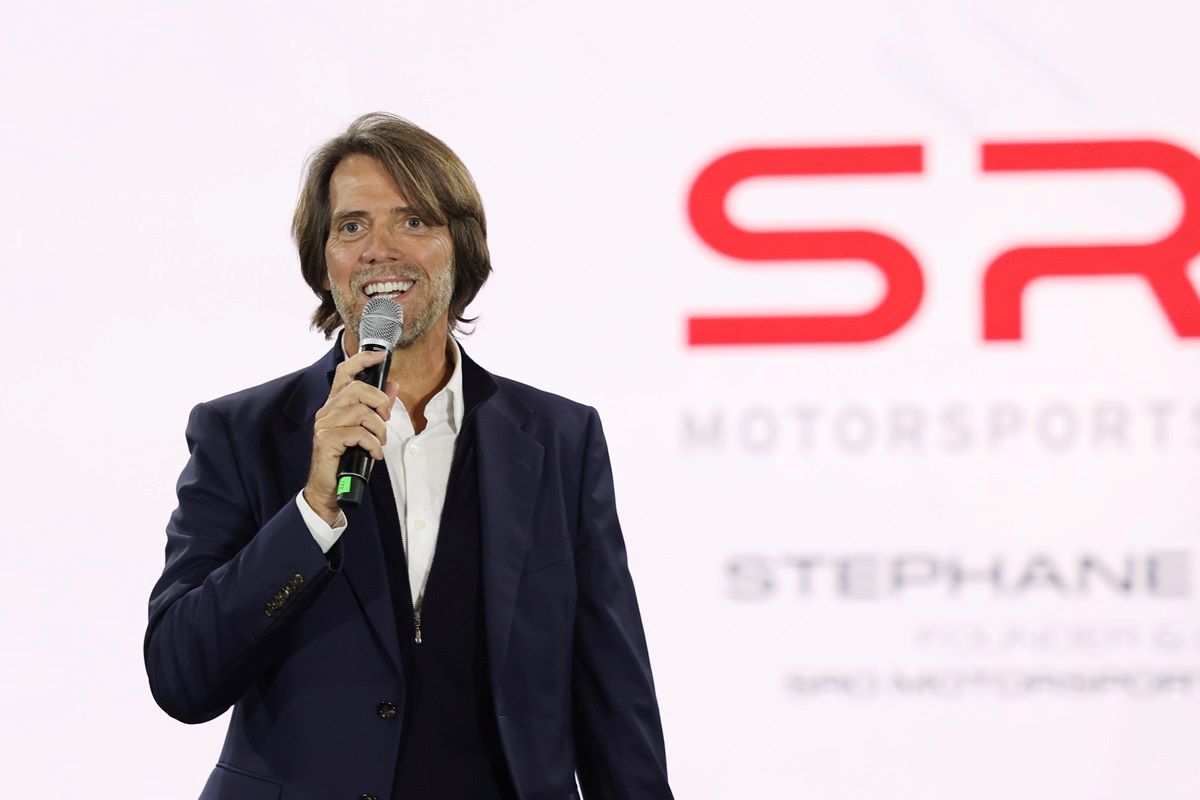
Stéphane Ratel often jokes that the first motor race he ever attended was one that he organised himself. Having started out organising exotic car tours before moving into motorsport promotion during the 1990s, he recognised something many others had overlooked.
Racing didn’t need more expensive prototypes masquerading as GT cars. Instead, it needed a simpler category that manufacturers could embrace, customer teams could afford and fans could instantly recognise. That far-reaching vision eventually became GT3.
Introduced in 2005, the concept was refreshingly straightforward. Instead of building bespoke racing machines costing millions, manufacturers would develop cars based on their road-going supercars.
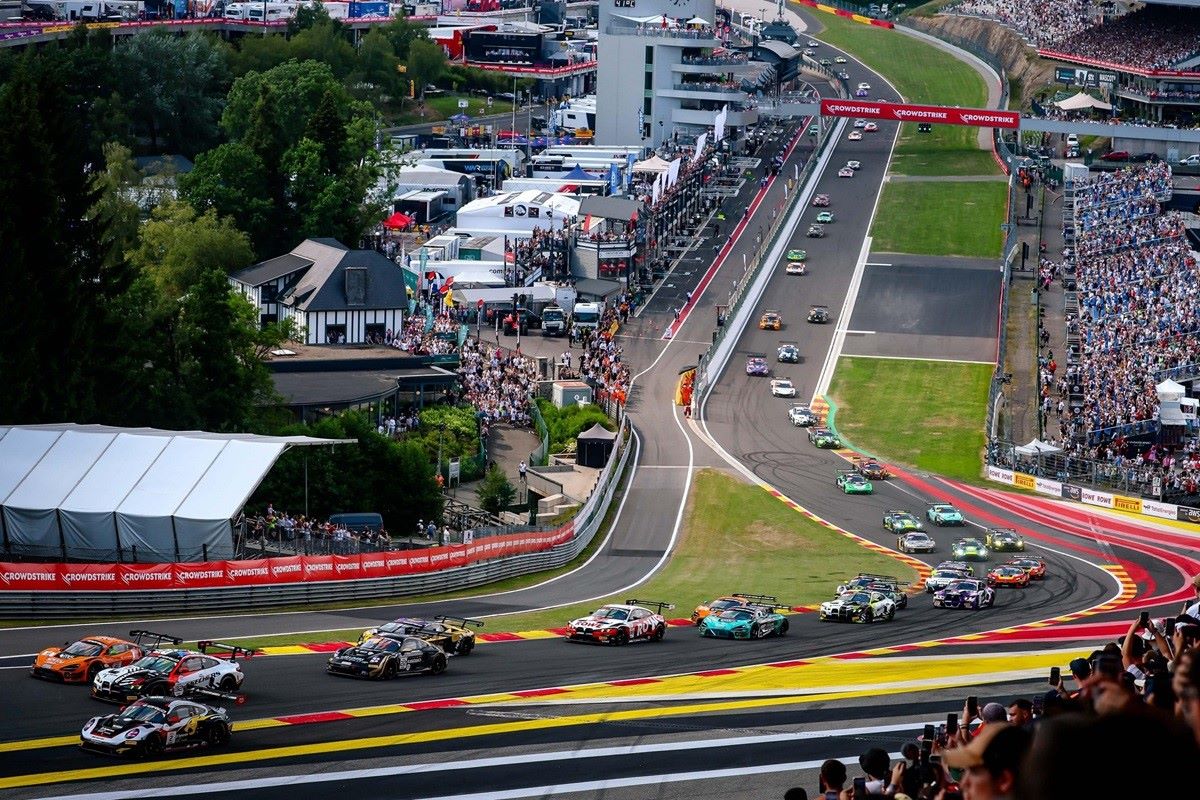
Through Balance of Performance, a Ferrari could race wheel-to-wheel with a Porsche, Mercedes-AMG, Aston Martin, Lamborghini, McLaren or BMW, with each retaining its own strengths and character while remaining capable of fighting for victory.
At the time, plenty of people questioned whether it would work. Purists disliked the idea of Balance of Performance, calling it ‘anti-racing’. Manufacturers wondered whether customer racing could ever become a serious business, while others believed the inevitable spending war would quickly destroy the category.
Instead, the opposite happened and GT3 became the global language of sports car racing. Today, these same basic regulations underpin championships across Europe, North America, Asia, Australia and the Middle East. The cars compete at Indianapolis, Bathurst, the Nürburgring, Suzuka and Macau. They’ve even become the top GT category at the Le Mans 24 Hours and in the FIA World Endurance Championship. More than two decades after its creation, GT3 is arguably the healthiest formula in international motorsport.
And nowhere demonstrates that success better than Spa.
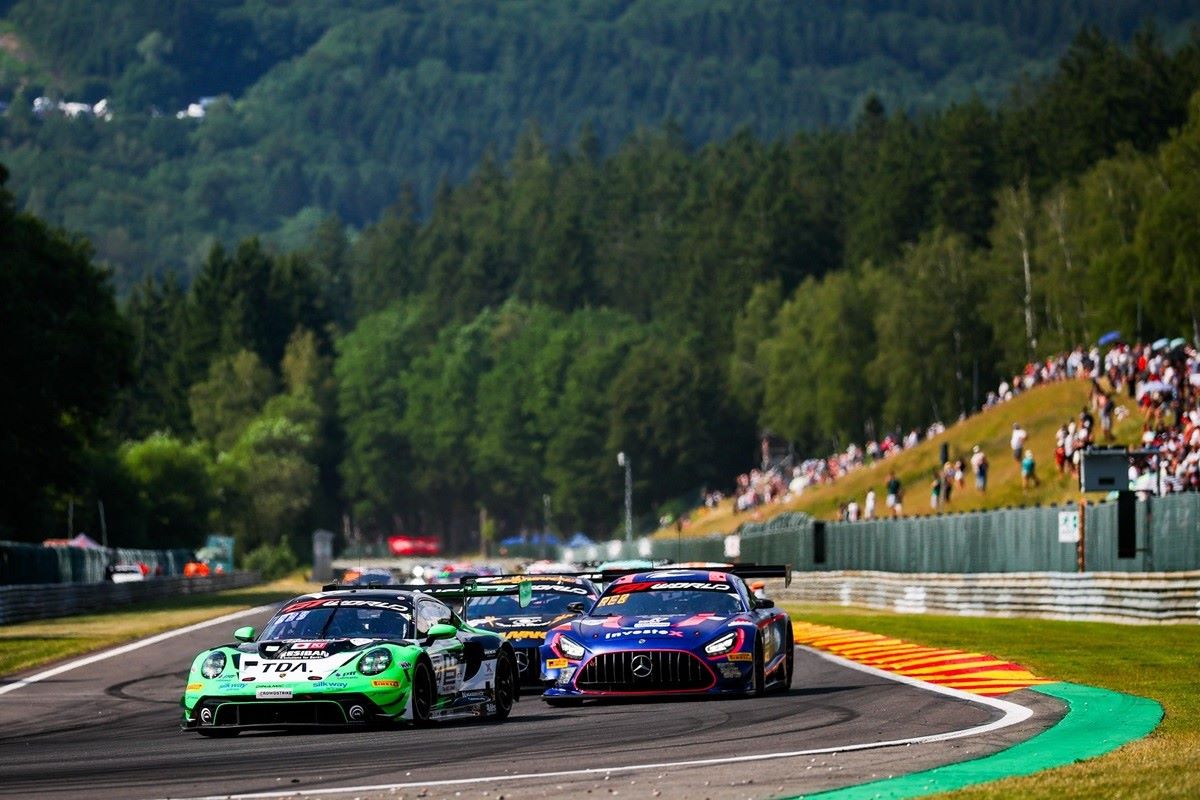
This year’s race brought together 69 GT3 cars from nine manufacturers, each built to the same regulations while retaining their own unmistakable identity. Ferrari arrived with genuine pace, while Porsche looked quietly confident. Mercedes-AMG once again fielded formidable strength in depth, while BMW, Aston Martin, McLaren, Audi, Lamborghini, Ford and Corvette all had realistic ambitions of leaving Belgium with one of endurance racing’s most prestigious trophies.
There are very few forms of motorsport that can produce such diversity at the sharp end. This is GT3’s greatest achievement, and Ratel’s enduring legacy.
Then, of course, there’s Spa itself. At just over seven kilometres, Spa-Francorchamps remains one of motorsport’s great driver’s circuits. Eau Rouge and Raidillon are still terrifying despite decades of safety improvements. Pouhon rewards commitment but punishes hesitation. Blanchimont also continues to make every driver think twice. Then the weather comes into the mix.
It’s entirely possible to leave La Source beneath blue skies and arrive at Les Combes through standing water. Teams monitor their weather radar almost as closely as lap times, knowing that one passing shower can undo six hours of perfect strategy. The Ardennes has a habit of reminding everyone that GT3 cars may have become astonishingly sophisticated, but nature still always has the final say.
That unpredictability is exactly why Spa so often rewards complete teams rather than simply the fastest cars.
And that’s what happened this year. Ferrari appeared to have one hand on the trophy after AF Corse secured pole position with its rapid 296 GT3. The Italian squad controlled much of the early running; its scarlet machine looking every inch the car to beat as the opening hours settled into the familiar rhythm of endurance racing.
Behind them, however, another story was quietly developing.
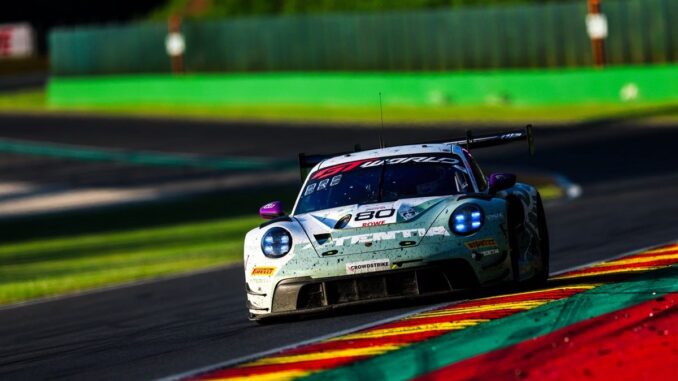
The #80 Lionspeed GP Porsche shouldn’t really have been in contention at all.
An engine change before the start forced Ricardo Feller, Thomas Preining and Bastian Buus to begin from the very back of the field after the rest of the grid had disappeared into the distance. Under most circumstances such a setback would effectively end any hopes of victory before the race had properly begun. Not at Spa.
A full day and night provide enough time for fortunes to swing repeatedly. A puncture at dawn, a poorly judged move through traffic or a badly timed Full Course Yellow can erase hours of hard work. Equally, calm decision-making and relentless consistency have a habit of bringing teams back into contention.
That’s exactly what happened this year, during the last weekend of June. The Porsche steadily carved its way through the field as others encountered problems. There was no dramatic charge or desperate gamble: simply lap after lap of disciplined endurance racing. By Sunday morning Thomas Preining had taken the lead, and from there Lionspeed combined outright pace with flawless execution to complete one of the great comeback victories in the event’s recent history.
It marked Porsche’s first Spa victory since 2020 and another reminder that endurance racing rewards resilience every bit as much as speed.
Ferrari’s formidable challenge gradually unravelled through a combination of punctures, contact damage and small setbacks that collectively proved decisive. Mercedes-AMG once again demonstrated why it remains one of endurance racing’s benchmark manufacturers, delivering another polished performance to secure second place through consistency rather than outright dominance.
Even the weather decided to play against type. Rather than the torrential overnight downpours that have become almost synonymous with Spa, this year’s race was contested in unusually hot conditions, placing enormous strain on drivers and machinery alike with peaks of 44 degrees centigrade. Rain eventually arrived during the early hours, but only briefly; just enough to remind everyone that at Spa, you should never assume you’ve seen the last of it.
Away from the race itself, the event continued to grow. More than 130,000 spectators made the pilgrimage to the Ardennes, creating another record-breaking atmosphere. The traditional parade – where the race cars trundle from the track to the centre of Spa – once again transformed the small town centre into a celebration of motorsport before a wheel had even turned in anger.
By Saturday evening the circuit has become part race meeting, part festival, with concerts, fireworks and packed grandstands carrying the atmosphere long into the night. As dawn broke on Sunday morning, bleary-eyed fans emerged from campsites clutching coffee rather than beer, watching headlights disappear through the morning mist as the race entered its decisive phase.
It’s an experience that feels increasingly unique.
The Spa 24 Hours has become far more than another round of the growing GT World series. It’s where manufacturers measure themselves against their fiercest rivals and customer teams compete on equal terms with factory-backed operations. Where professional stars share the circuit with ambitious amateurs. Where victory demands not only speed but judgement, teamwork and endurance in every sense of the word.
That, perhaps, would please Stéphane Ratel more than any individual result.
When he created GT3, the ambition was never simply to write another rulebook but instead to build a sustainable form of racing where manufacturers wanted to compete, customer teams could flourish and fans could enjoy close competition between cars that they could recognise from the road.
Looking around Spa today, it’s difficult to imagine a more convincing argument that he succeeded. The Spa 24 Hours has always been a name. But Stéphane Ratel made it the greatest race in GT racing.
Author Bio:
Anthony Peacock works as a journalist and is the owner of an international communications agency, all of which has helped take him to more than 80 countries across the world.
Photographs courtesy of Porsche AG
Be the first to comment